
What equipment do biology students need, and when?
In short
Common personal items include a specified coat, suitable eye protection and, for certain classes, a dissection kit or hand lens. Your university's current list determines what you must buy and when. Microscopes and larger equipment are normally supplied for classes.

Contents
Botany and identification
A portable lens and appropriate identification literature help compare flowers, leaf surfaces and other features. Fine forceps and needles may help handle small parts. A 10× folding lens offers compact close-up observation; see how to use it.
Zoology and comparative anatomy
Depending on the curriculum, teaching uses models, prepared specimens, images or lawfully supplied dead organisms. Scissors, forceps, probes and cutting tools may be needed. A Lorenz biology kit is a starting point for comparing contents with your list. Owning a kit does not authorise any particular dissection: read about animals in German education.
Microscopy and cell biology
Simple fresh preparations may require slides, coverslips and fine tools, often supplied by the course. Check before buying large packs. Specimen quality and correct settings often matter more than maximum magnification.
Chemistry, biochemistry and microbiology
Safety induction, documentation and task-specific protection take priority. Select gloves for the substances and steps, not simply “biology”. Personal coats and glasses may be required while consumables are provided. Microbiological and molecular work follows defined hygiene and operational procedures.
Field trips
Weather-appropriate clothes, secure footwear, notes and often a lens are useful. Extras depend on terrain, weather and learning objectives. Do not independently collect protected plants or animals. Observation, photographs and supplied specimens can also support identification.
Buy in this order
Read the course and student association information; check loans and supplied consumables; choose coat and eyewear; compare each kit item with the list; add lenses and extras only for actual need.
Browse coats, protection, kits and laboratory and biology equipment. The Hamburg biology student shop illustrates local practice, not nationwide requirements.
Sources & further reading
General guidance for study and teaching. For your actual work, your safety briefing, hygiene plan, lab instructions and the product instructions apply. Legal information refers to Germany.
From our shop
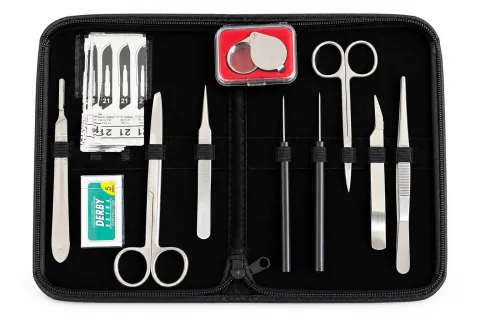 + Dissection Kit "Lorenz" for Biology
4,7 von 5 Sternen (78)
ab 22,99 €
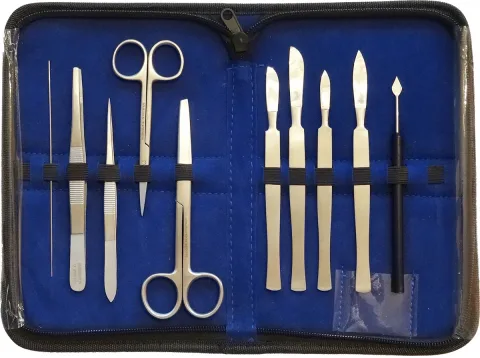 + Dissection Set "Paracelsus" with Fixed Blade Scalpels
4,6 von 5 Sternen (54)
ab 16,79 €
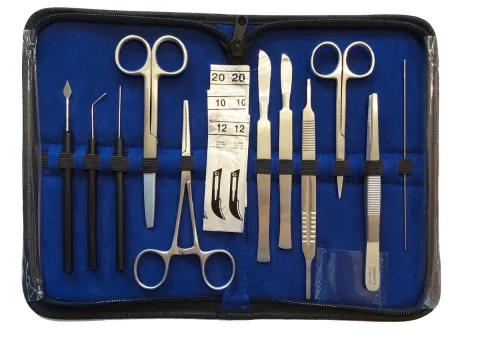 + Dissection Set "Hippocrates" with Fixed and Interchangeable Blade System
4,6 von 5 Sternen (54)
ab 19,29 €
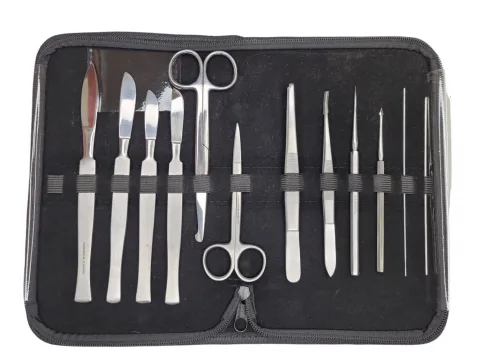 + Dissection Instruments "Harvey" for Medicine
4,7 von 5 Sternen (64)
ab 25,79 €